How do species interactions build and maintain biodiversity?
We combine field experiments, long-term resurveys, ecological networks, disease ecology, genetics, computer vision, and hierarchical models to understand how pollinator communities respond to global change — and to turn that understanding into better conservation and restoration.
Current questions. How does global change alter those interactions and determine ecological vulnerability? How can we use ecological interactions to restore resilient communities? Can restoration rebuild not just species lists, but also the interactions that maintain healthy populations and ecosystem function ?
Half a century of change in California pollinator networks
What disappears first: species, interactions, or the ecological roles that tie communities together?
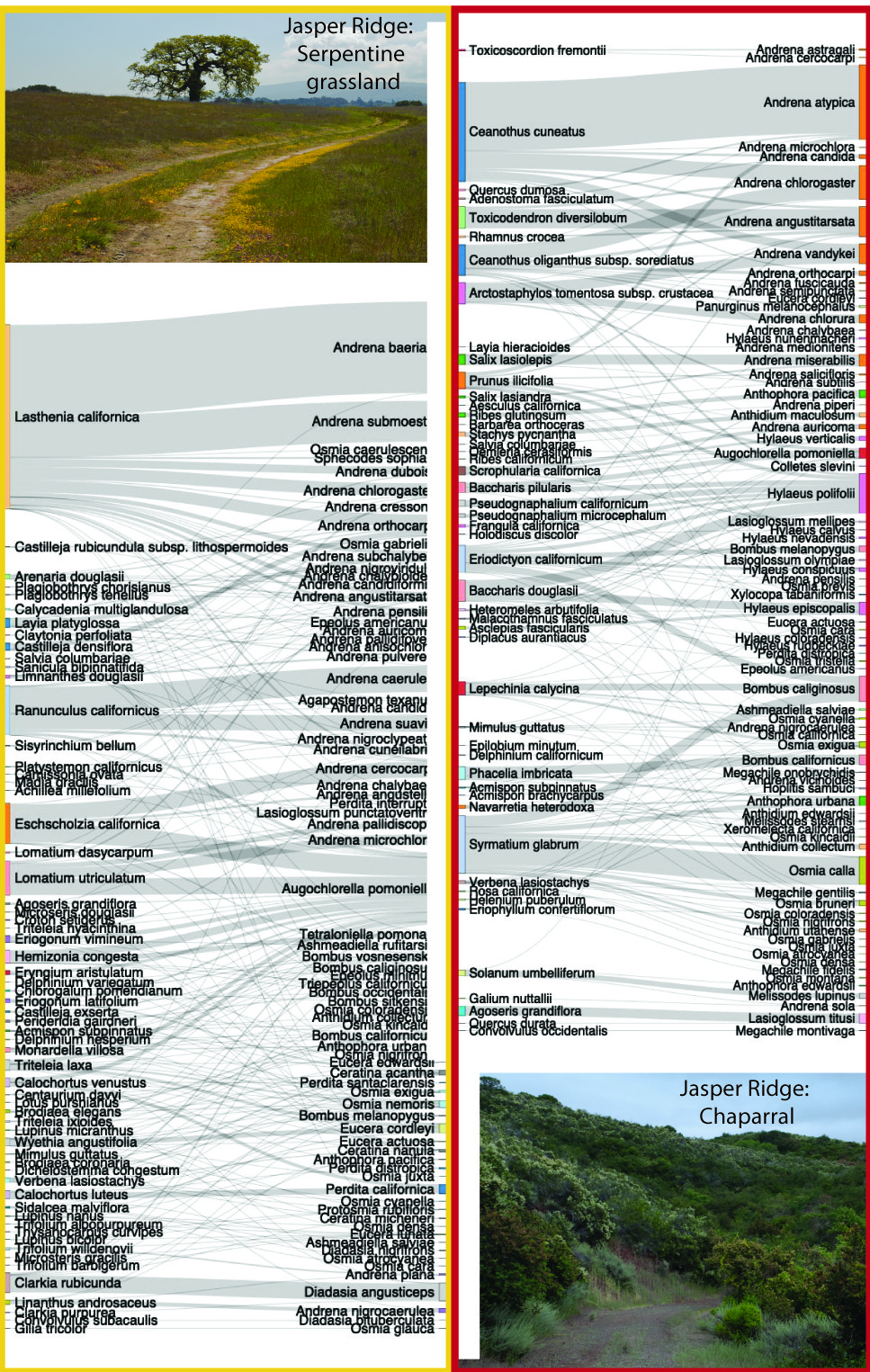
In the late 1960s and early 1970s, Andrew Moldenke recorded hundreds of thousands of plant–insect interactions across California, from coastal scrub and desert to forests and alpine communities. We are returning to those same landscapes to reconstruct how pollinator communities and their interaction networks have changed over roughly 50 years.
The resurvey lets us move beyond snapshots in space. By pairing historical and contemporary communities with climate and land-use change, we can ask which species and interactions are most vulnerable, whether ecological networks are becoming more redundant or more fragile, and whether specialization predicts persistence.
Bee sensors + spatial capture–recapture
Can we estimate where rare bees live and move without harming the animals we are trying to monitor?
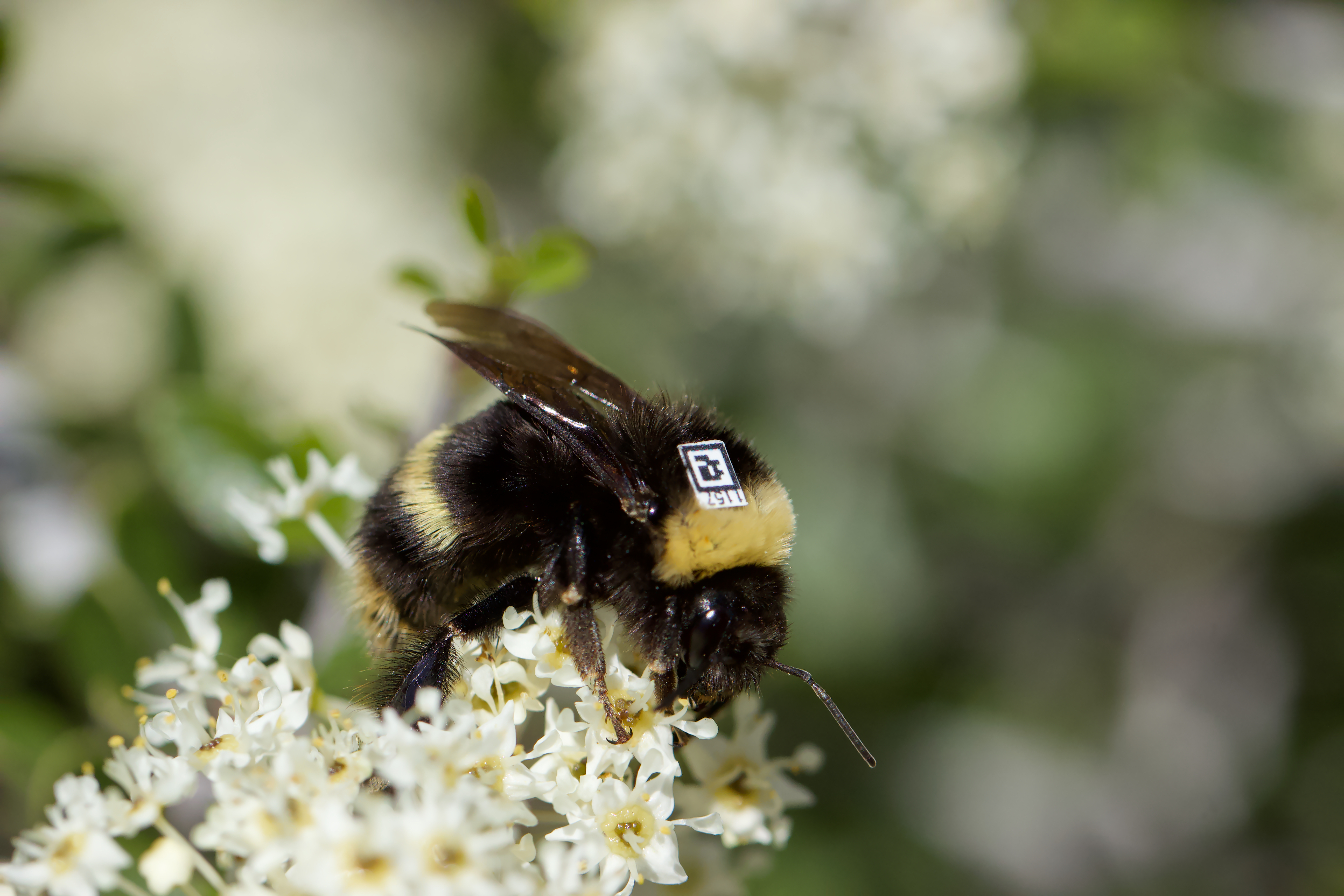
We are building a non-lethal monitoring system that combines tiny individual QR tags, networks of AI-assisted cameras, traditional net recaptures, and spatial capture–recapture models. The cameras repeatedly resight marked bumble bees while computer vision helps identify species and individuals across the landscape.
The modeling challenge is just as important as the hardware: camera detections and net recaptures have different observation processes. We are developing an integrated spatial capture–recapture framework to estimate density, movement, habitat use, and detectability while explicitly accounting for those differences. The long-term goal is a practical, open workflow for monitoring rare and potentially listed pollinators.
Managed forests as pollinator habitat
Can timber landscapes produce wood and still sustain diverse, healthy bee communities?
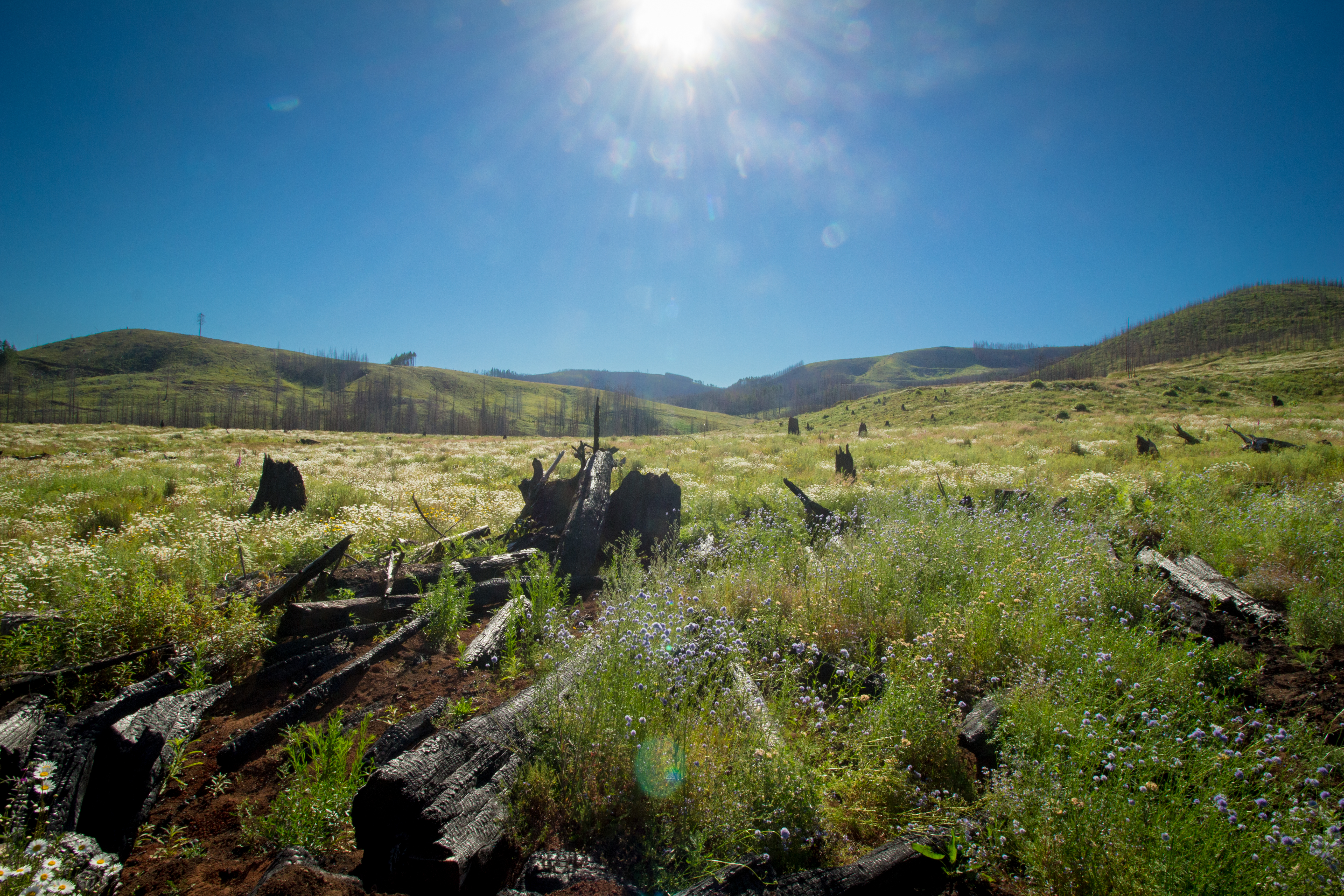
Recently harvested forests can be remarkably bee-rich, but that habitat changes quickly as the canopy closes and floral resources shift. Across Oregon forest landscapes, we test how stand age, thinning, canopy structure, floral resources, and post-harvest management shape bee abundance, diversity, and parasite prevalence.
We are also running large-scale restoration experiments that seed native wildflowers into burned slash piles and other post-harvest microsites. The aim is not simply to attract bees for a season, but to identify feasible management practices that improve forage, bee diversity, health, reproduction, and persistence — including for species of conservation concern.
An introduced bumble bee moves west
What happens when a commercially managed pollinator becomes an invasive species?
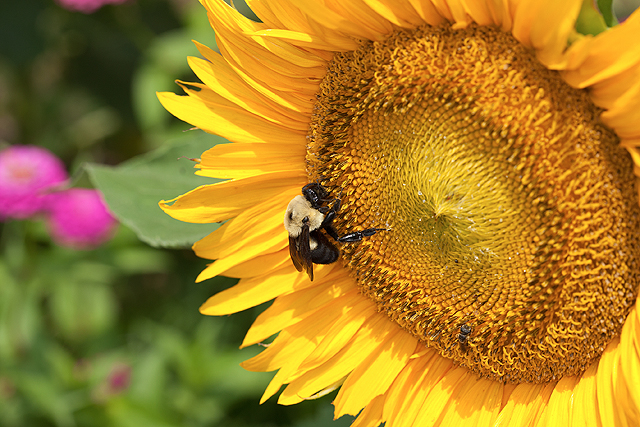
The common eastern bumble bee, Bombus impatiens, escaped commercial culture in southwestern British Columbia and has spread through the Pacific Northwest. We ask what allows it to expand, how it integrates into native plant–pollinator networks, and whether native bumble bees pay a cost through competition, altered diets, or parasite spillover.
The project deliberately connects invasion biology with pollinator health: distribution and landscape context tell us where the invasion is advancing, interaction networks tell us how resource use shifts, and parasite screening reveals whether an introduced host changes disease risk for native bees.
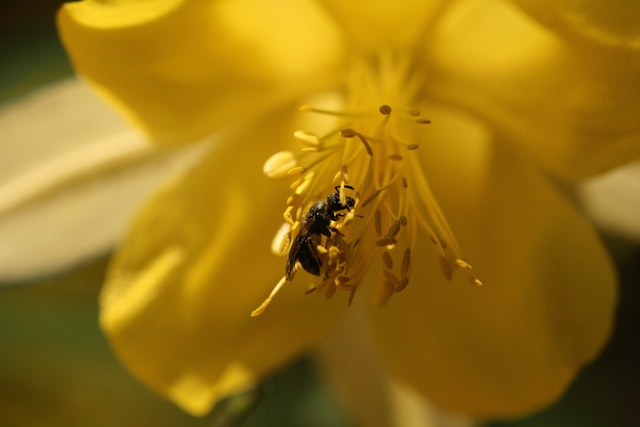
Madrean Sky Islands
When does specialization increase function — and when does redundancy protect a community from collapse?
The Madrean Sky Islands are an archipelago of mountaintop communities separated by desert lowlands. That natural replication lets us test a central tension in ecological networks: specialized, complementary interactions can maximize function, while generalized, redundant interactions may provide insurance when species are lost.
Across five years of field work, we combined plant–pollinator networks with parasite screening, microbiomes, pollen metabarcoding, population genetics, and plant reproduction. The result is a multi-level view of how community composition, individual behavior, disease, and genetic connectivity contribute to ecological function and resistance.
Fire, pyrodiversity, and pollinator resilience
Can variation in fire create the heterogeneity that lets pollinator communities persist?
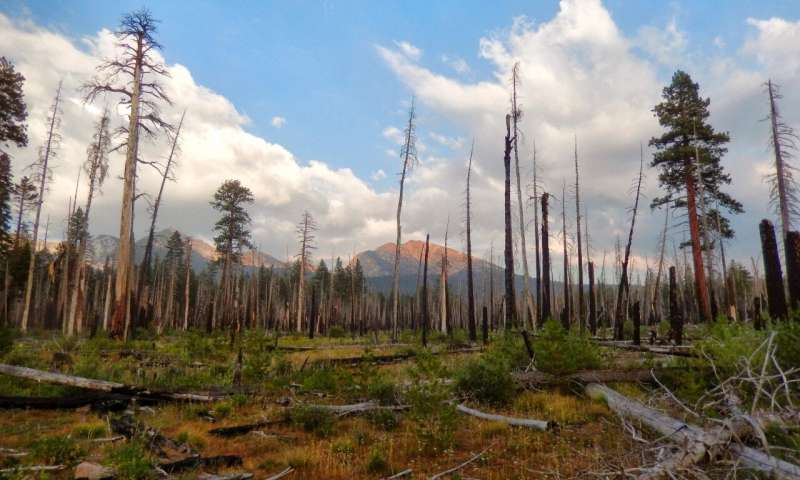
Fire does more than remove habitat. By creating mosaics of burn histories and severities, it can generate spatial and temporal variation in flowering resources, nesting conditions, and species interactions. Our work asks when that heterogeneity promotes biodiversity.
This theme began with long-term work in California forests and now extends into Oregon landscapes affected by the 2020 fires, where we study bee communities, plant–pollinator interactions, parasites, post-fire harvest, and restoration.
Prairie restoration + prescribed fire
How do we restore fire-dependent prairies when drought, invasive species, and fragmentation are all changing at once?
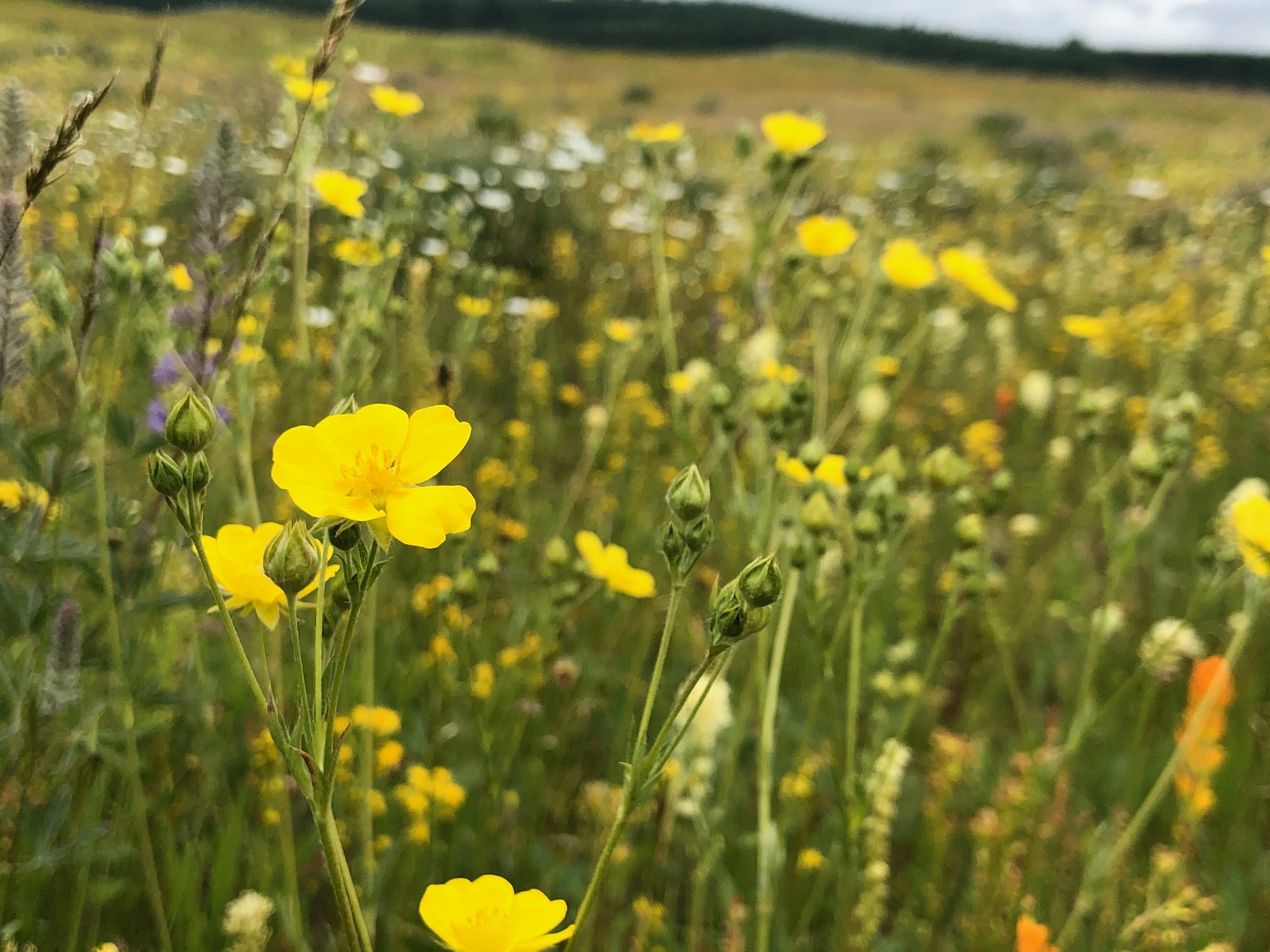
Pacific Northwest prairies are among the region's most imperiled ecosystems. Prescribed fire is essential to maintaining open prairie habitat, but burning alone does not guarantee recovery of native plants or pollinators. We are testing how fire history, post-burn planting, species arrival order, drought resilience, and landscape context shape restoration outcomes.
At Howard Buford Recreation Area / Mt. Pisgah, work initiated through the PACSP proposal asks whether priority effects can suppress invasive grasses, whether drought-conditioned or selected native plants persist better, and whether seed mixes can be designed to rebuild plant–pollinator interactions and reproduction. In parallel, work in six Puget Sound prairies combines a decade of prescribed-fire history with four years of bee and flowering-plant data to test whether pyrodiversity supports bee taxonomic and functional diversity — and how the surrounding landscape constrains the species available to colonize restored sites.
Agricultural landscapes and pollinator persistence
What allows wild bees to persist in intensely managed landscapes?
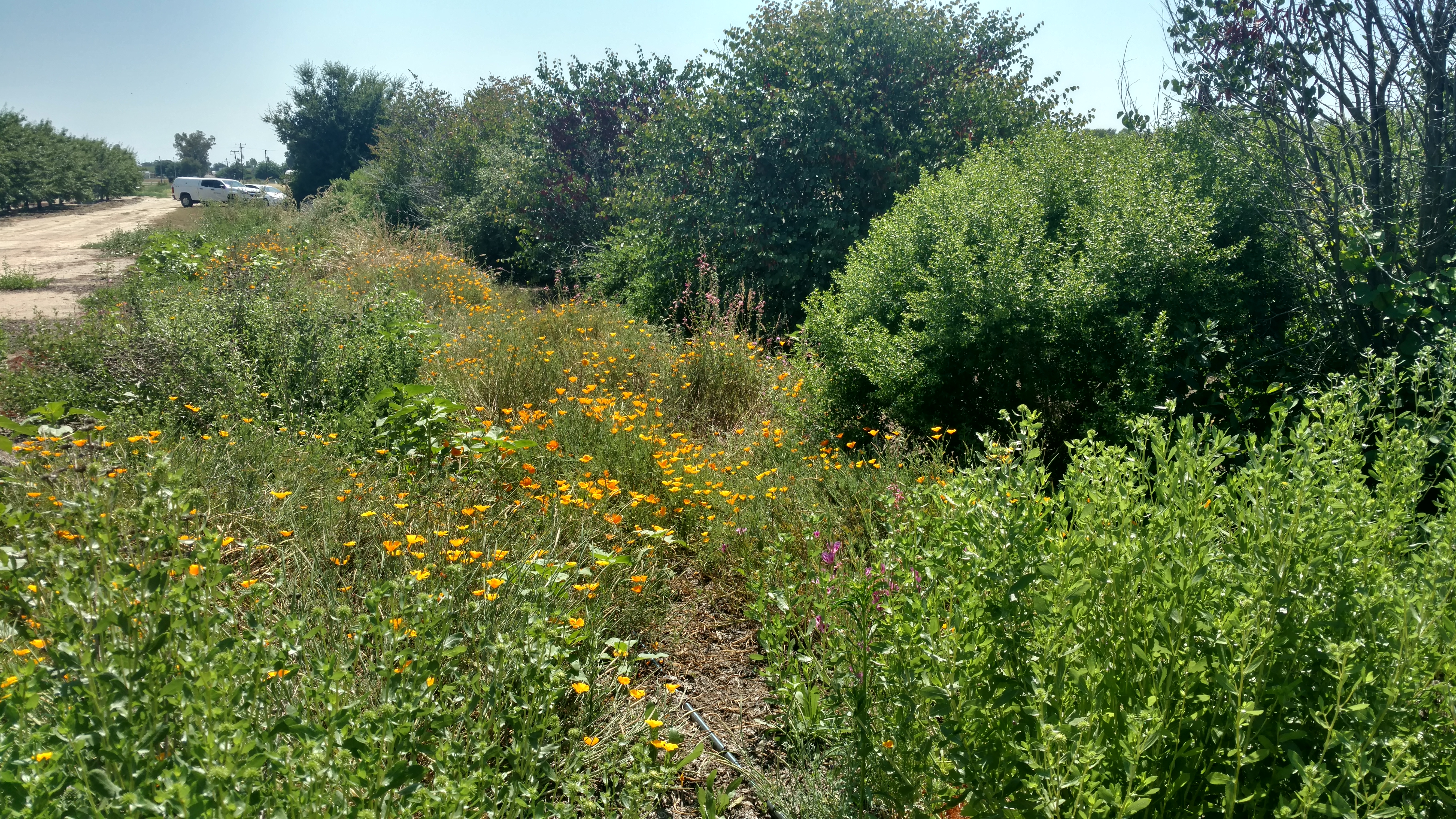
Much of the lab's current thinking about restoration and network resilience grew out of long-term work in California agriculture. We studied how hedgerow restoration, floral diversity, crop bloom, pesticides, parasites, and pollinator behavior interact — and why simply adding habitat is not enough unless species can colonize, persist, and flexibly reorganize their interactions.
This work also extends from ecology to implementation: what incentives and policies actually make bee-friendly practices feasible for growers?
For the complete and most up-to-date publication list, see Publications.